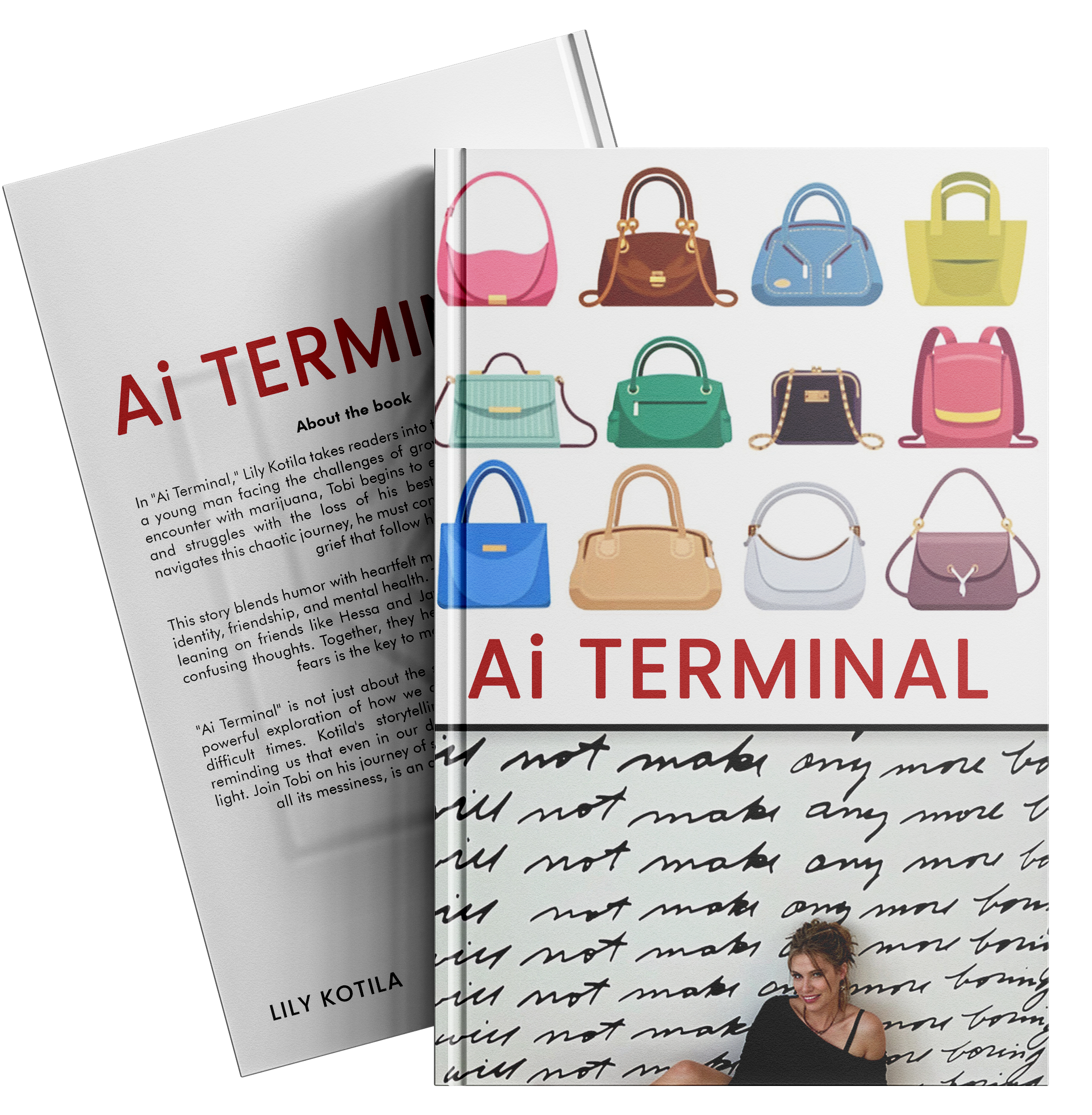
About The Book
About The Book
Ai Terminal
At the heart of AI Terminal lies a metaphysical architecture: layered Earths, coded systems, and unseen forces referred to as “Pixlers” who control commodities rather than souls. In this universe, heaven and hell are not destinations but competing supply chains influencing what humans consume: physically, emotionally, spiritually.
The narrative moves fluidly between lived memory and symbolic world-building. A vertical prison from cinema becomes a meditation on resource distribution and moral collapse. Homelessness becomes an ethnography rather than an absence. Love exists in six dimensions simultaneously recognized beyond touch, beyond outcome, beyond enactment.
Throughout the book, bodies are described as interfaces; neutral processors navigating overwhelming inputs. Commodities become portals. Toys become early training devices for desire and identity. The world appears structured by invisible zoning systems, streets assigning roles, houses holding private complexity, and anomalies exposing flawed maps.
The book ultimately confronts the split between inner cosmology and outer performance. It does not attempt to resolve that tension. Instead, it asks whether both realities can coexist without erasing each other.
This is philosophy wrapped in lived experience.